Aktyw Zyskvexis
Why Trading No Longer Delivers the Expected Results
Sign up now

Trading outcomes often feel disappointing because the structure behind price movement has shifted. Price no longer reacts in a simple, linear way.
Activity builds in layers, with liquidity forming around specific zones rather than spreading evenly. Large participation tends to concentrate in these areas, which creates uneven movement.
This means trades based on surface patterns often miss what is happening underneath. A setup that once worked may now fail because deeper positioning controls the outcome. Recognising how these zones form and how price interacts with them becomes more relevant than relying on visible patterns alone.
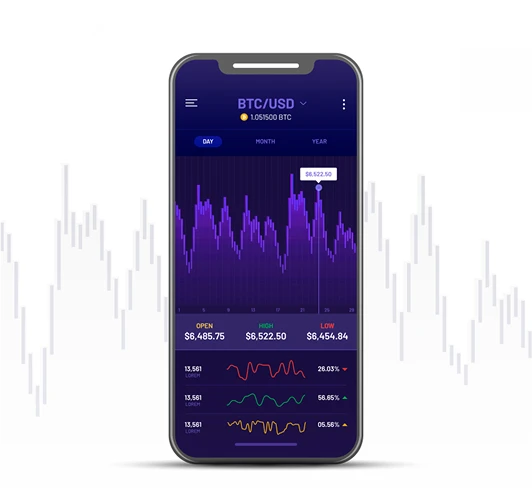
Large participants now operate through strategies that develop over time rather than through single actions. Their positioning often shapes where trends extend and where price pauses. Comparing this behaviour with smaller participants shows a clear difference in approach. Institutions tend to build positions gradually, often around areas where liquidity is sufficient to support size. This creates zones where price reacts repeatedly. Recognising how these actions unfold explains why certain movements continue while others fade early. The shift highlights that trading outcomes are no longer driven by isolated decisions but by understanding how larger forces guide direction Aktyw Zyskvexis.

In many learning settings, curiosity begins with simple questions. Why does price pause at certain levels? Why do some moves lose strength while others continue? A structured starting point helps organise these questions into a clearer direction.Aktyw Zyskvexis introduces this pathway by connecting individuals with organisations that discuss how financial systems operate in practice. These discussions focus on underlying structure rather than surface movement. For example, interpreting how liquidity builds or how order flow develops can shift attention toward deeper behaviour. This early exposure creates a more stable foundation for further exploration.

Financial education is not limited to a single group. It becomes relevant for individuals who want to understand how decisions are formed within structured environments rather than relying on surface interpretation. Those who engage with financial systems often benefit from examining how positioning, timing, and participation shape outcomes across different conditions.
Interest in investment education often starts when individuals begin examining how participation shapes financial environments rather than focusing only on visible results Aktyw Zyskvexis. Some learning settings introduce how capital is distributed across different levels, where participants operate with varying intentions. Discussions may highlight how positioning develops within these layers and how execution unfolds as a result of that positioning, offering a deeper view beyond surface activity.

Effective investment education often begins with access to materials that explain how financial systems are organised beneath surface activity. In many learning settings, structured content focuses on how market structure develops through layers of participation and how liquidity forms at specific levels. These resources help individuals interpret how activity is arranged within financial environments, providing a foundation for analysing how positioning influences behaviour.
Another important resource includes analytical frameworks that guide how decisions are formed. Some learning environments introduce methods for comparing how participants approach similar conditions using different strategies. These tools allow individuals to examine how timing, exposure, and positioning influence outcomes. By working with these frameworks, learners can better understand how structured thinking shapes decision processes rather than relying on fixed assumptions.
A further category of resources focuses on how exposure is managed within Aktyw Zyskvexis and how behaviour influences financial activity. These materials explore how positions are adjusted across different conditions and how participants respond to pressure or opportunity. Evaluating such resources reveals how risk is distributed across decisions and how behavioural patterns interact with structured environments in Aktyw Zyskvexis. This perspective adds depth by connecting internal decision making processes with external financial outcomes.
Investment education often changes how traders approach their decisions by moving attention away from outcomes and toward structured processes. Instead of reacting to isolated results, traders begin to examine how entries, adjustments, and exits are planned within a defined framework. This shift introduces a more consistent way of thinking, where each decision is evaluated based on structure, timing, and positioning rather than short term results.
Another change appears in how traders interpret financial environments. Learning introduces how liquidity is distributed across levels and how order flow develops within these areas. Traders begin to recognise where participation is concentrated and how this concentration influences continuation or hesitation. This perspective replaces surface interpretation with a deeper understanding of how structured environments guide activity.
Investment education also encourages traders to compare different approaches rather than relying on a single method. Some strategies may prioritise controlled exposure, while others adjust based on changing positioning. By evaluating these approaches within similar conditions, traders develop the ability to adapt their decision process. This change highlights how interpretation plays a central role in shaping outcomes.
Another important transformation involves how traders manage exposure. Instead of focusing only on entry points, education introduces how positions can be scaled, reduced, or maintained depending on surrounding conditions. Traders begin to evaluate how risk behaves across different environments, allowing them to adjust positioning more effectively rather than treating exposure as fixed.
Investment education often changes how traders interpret their own behaviour. Reactions such as hesitation, overcommitment, or early exits become areas of analysis rather than unnoticed habits. By examining how behaviour interacts with positioning, traders gain insight into how internal responses influence external outcomes. This awareness supports more controlled participation over time.
Traders who develop structured thinking often focus on how decisions are applied in real conditions rather than just how they are planned in theory. With Aktyw Zyskvexis, learners can explore how positioning, timing, and exposure are aligned with the environment being observed. Rather than reacting to isolated changes, the emphasis shifts toward executing decisions that fit within a clearly defined approach, promoting consistency and discipline in trading practices.
Consistency develops when traders follow a repeatable process across different conditions. Some situations may require patience, while others allow gradual participation. Evaluating how execution changes across these scenarios helps traders maintain balance between flexibility and discipline. This approach reduces random decision making and supports more controlled participation.
Over time, applying structured thinking strengthens the ability to remain consistent even when conditions vary. Traders begin to recognise when to engage, when to wait, and how to adjust exposure without disrupting their overall approach. This final stage connects analysis with execution, forming a complete cycle of decision making within financial environments.

In many learning settings, traders focus on how positioning changes across different environments. Some conditions show concentrated activity within defined levels, while others reflect broader distribution across ranges.
Interpreting these differences helps traders adjust how they approach execution, aligning decisions with how participation is organised rather than applying a fixed method.

Another perspective examines how order flow varies when conditions shift. When activity becomes more concentrated, traders may focus on controlled positioning within narrower ranges. In contrast, more dispersed participation may require flexible adjustments. Comparing these environments helps traders understand how execution should adapt based on how activity develops.
A further layer involves refining how decisions are made depending on the surrounding context. Traders may adjust exposure, timing, or position size based on how conditions evolve. This approach supports more consistent alignment between actions and environment, allowing decisions to reflect structure rather than isolated signals.
Some discussions focus on how exposure should change depending on how activity is distributed. In environments where participation is concentrated, traders may adopt more controlled positioning, while broader conditions may allow gradual expansion. Evaluating how exposure interacts with surrounding conditions helps traders manage risk in a way that reflects the structure of the environment rather than applying fixed limits.
Another perspective examines how timing varies when market conditions shift. Certain environments may require waiting for clearer positioning to develop, while others support more immediate participation. Comparing these differences allows traders to refine when to engage and when to hold back. This approach strengthens alignment between timing decisions and how activity unfolds within financial systems.
Execution mistakes often occur when actions are repeated without evaluating why outcomes differed. Some traders begin to examine how decisions were applied rather than focusing only on the result. This includes reviewing how timing, position size, or entry location influenced the outcome. Identifying these differences helps separate consistent methods from actions that lead to repeated errors.
Another perspective focuses on recognising patterns in mistakes rather than treating them as isolated events. Certain errors may appear during specific conditions, such as entering too early during developing activity or holding positions beyond their intended range. Comparing these situations allows traders to understand when their approach becomes misaligned with the environment.
A further layer involves refining execution through controlled adjustments instead of complete changes. Rather than abandoning a method after a poor outcome, traders may adjust how it is applied under different conditions. This approach supports gradual improvement by focusing on precision in execution, helping reduce recurring mistakes while maintaining a consistent framework.
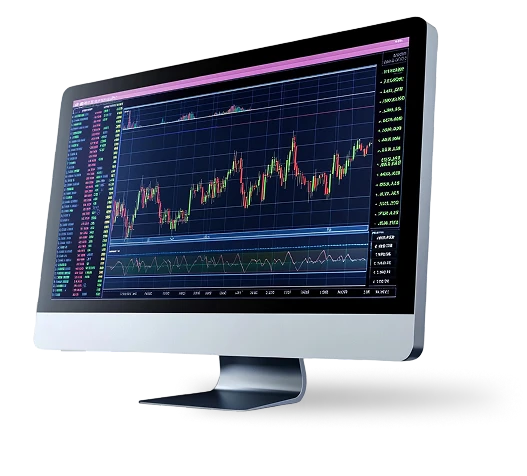
Not every situation supports meaningful participation. Some conditions show unclear positioning, where activity does not form within defined levels or lacks consistency across timeframes. In these cases, engaging too early may lead to decisions based on incomplete development. Recognising when conditions remain undefined helps traders avoid unnecessary exposure.
Another perspective focuses on identifying imbalance between risk and opportunity. Certain setups may appear valid on the surface but lack sufficient participation to support continuation. Evaluating how activity behaves around these areas allows traders to distinguish between strong and weak conditions. This comparison helps filter out trades that do not align with a structured approach.
A further layer involves understanding how restraint contributes to long term consistency. Ignoring low quality setups reduces the frequency of reactive decisions and preserves focus for conditions that offer clearer alignment. Over time, this selective approach strengthens discipline and improves overall execution by prioritising quality over quantity.

Confidence in trading does not come from frequent activity but from recognising when decisions align with expected outcomes. Some traders begin to compare how their planned approach performs across different situations, focusing on whether execution follows intention. This process helps separate random outcomes from decisions that are consistently applied within structured conditions.
Another perspective examines how confidence develops through validation rather than assumption. When similar decisions produce stable results over time, traders begin to trust their process more than isolated outcomes. This reduces hesitation and improves clarity in execution, as actions are based on tested understanding rather than uncertainty.
A further layer involves maintaining confidence without becoming overdependent on recent results. Traders who evaluate decisions across multiple conditions are less likely to rely on short term outcomes. This supports a balanced approach where confidence is built on consistency and evaluation rather than temporary performance.
In many learning settings, individuals develop an understanding of financial concepts but face challenges when applying them within trading environments.
Investment education introduces frameworks for interpreting structure, positioning, and behaviour, yet translating these ideas into real decisions requires additional refinement. This step involves aligning theoretical understanding with how decisions are executed under actual conditions.

Another perspective focuses on how trading requires adjusting educational concepts across varying conditions. While learning may explain how positioning develops or how exposure is managed, applying these ideas depends on recognising when conditions support that approach. Comparing how the same concept performs across different situations helps individuals understand how education guides decisions without enforcing fixed actions.
A further layer involves improving how consistently knowledge is applied in trading decisions. Investment education provides the foundation, but performance depends on how execution aligns with that understanding. Small variations in timing, exposure, or sequencing can influence results. Refining this connection supports clearer execution and more controlled participation in trading environments.
Some discussions focus on how educational frameworks provide guidance but do not account for every situation encountered in trading. While these frameworks explain how positioning and exposure are structured, real conditions may present overlapping signals or unclear setups. Evaluating these limitations helps individuals understand where interpretation becomes necessary beyond predefined concepts.
A further area of focus involves balancing knowledge with action. Understanding how financial systems operate does not automatically translate into effective execution. Traders must consider how timing, exposure, and sequencing interact during real participation. This balance ensures that decisions reflect both understanding and practicality.
Investment education introduces a structured way to interpret how financial environments develop, while trading reflects how those ideas are applied in practice.
The connection between the two becomes clearer as individuals move from understanding concepts to aligning decisions with actual conditions. This progression highlights how learning supports interpretation, but effective participation depends on how that understanding is used within evolving environments.

Strong participation areas often form where activity becomes concentrated over time. These zones are not random but develop as positions build gradually within specific ranges. Traders examine how activity behaves when price revisits these areas to understand whether participation continues or weakens. This helps in recognising how positioning influences future movement.
Time horizon affects how traders interpret the same environment. Short duration views may focus on immediate positioning, while longer perspectives consider how capital is distributed across broader phases. Understanding this difference allows traders to align decisions with their intended duration rather than mixing conflicting approaches.
Order flow reflects how buying and selling activity unfolds within structured environments. Traders analyse how sequences of orders develop over time to understand whether participation supports continuation or signals imbalance. This perspective shifts focus toward how execution shapes behaviour within financial systems.
| 🤖 Signup Expense | Completely free registration |
| 💰 Charges Applied | No hidden charges |
| 📋 Sign-Up Method | Straightforward, fast registration |
| 📊 Educational Topics | Focused learning in Cryptocurrency, Forex, and Investments |
| 🌎 Countries Available | Operational in most countries, excluding the USA |